Learning about Terroir at Bernabeleva with Juan Díez Bulnes

Updated: Jan 19
Dear friends,
I visited Bernabeleva with my brother Juancho and friend Jesús in December 2018 and created a post that you can find under Wine Trip Reports tab. This second visit, my brother-in-law Jerry and I focused on learning more about its "terroir". You will find in this post a series of videos capturing some of our improvised conversations with Juan Díez Bulnes, the owner and founder. They were very interesting and informative and I plan to use some of them as material for my wine appreciation classes at OLLI University of Pittsburgh and Osher @ Carnegie Mellon University. I hope you enjoy them!
Terroir is the term used to describe the combination of geographic and climatic factors such as latitude, temperature, rain, humidity, wind, elevation, orientation, soil, etc. at a specific location. However, after conversing with Juan in his vineyards and winery, it became clear to me that this terroir expression would not be the same without him and that there is a personal component linked to terroir that includes knowledge, many years dedication, and passion. I hope the following videoclips illustrate this in a better way than my simple words.
First, let's describe the location. Bernabeleva is located in Central Spain, in the SW corner of Madrid province, a continental climate area of relatively high elevation in a gap between the Sierra de Gredos and Sierra de Guadarrama:


This area falls under the broad and diverse Vinos de Madrid denomination of origin (D.O.).

However, its characteristics significantly differ from the rest of the D.O.. It is located at the SE feet of the Gredos mountain chain with predominantly granitic soil.

This soil was created during tectonic and erosive processes that have been converting large granite boulders from Sierra de Gredos in small stones and grains.
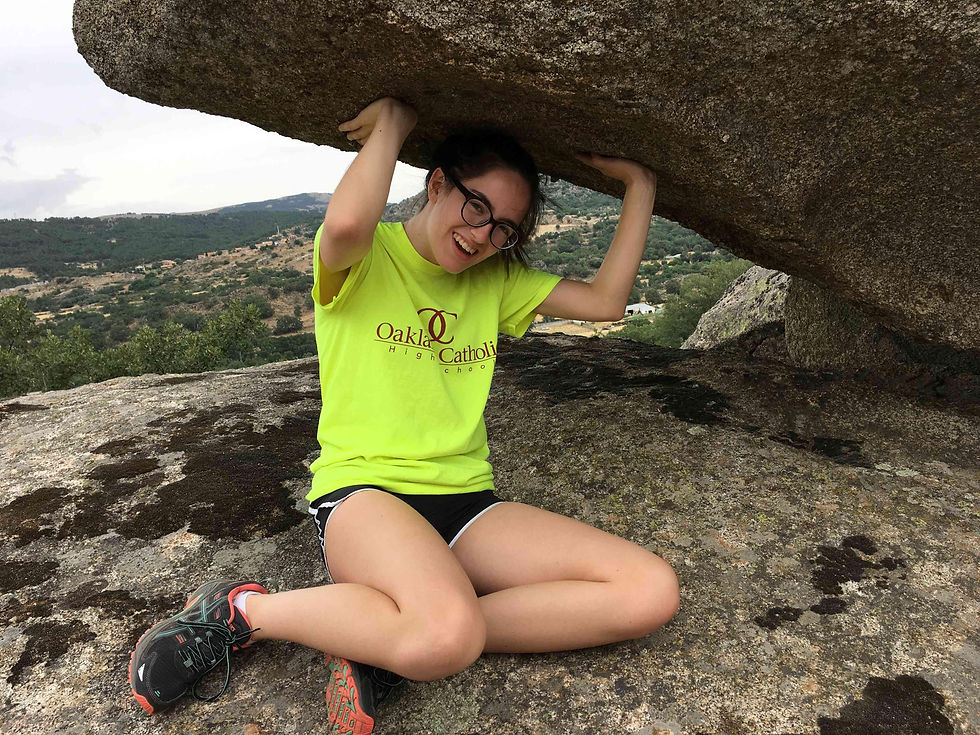
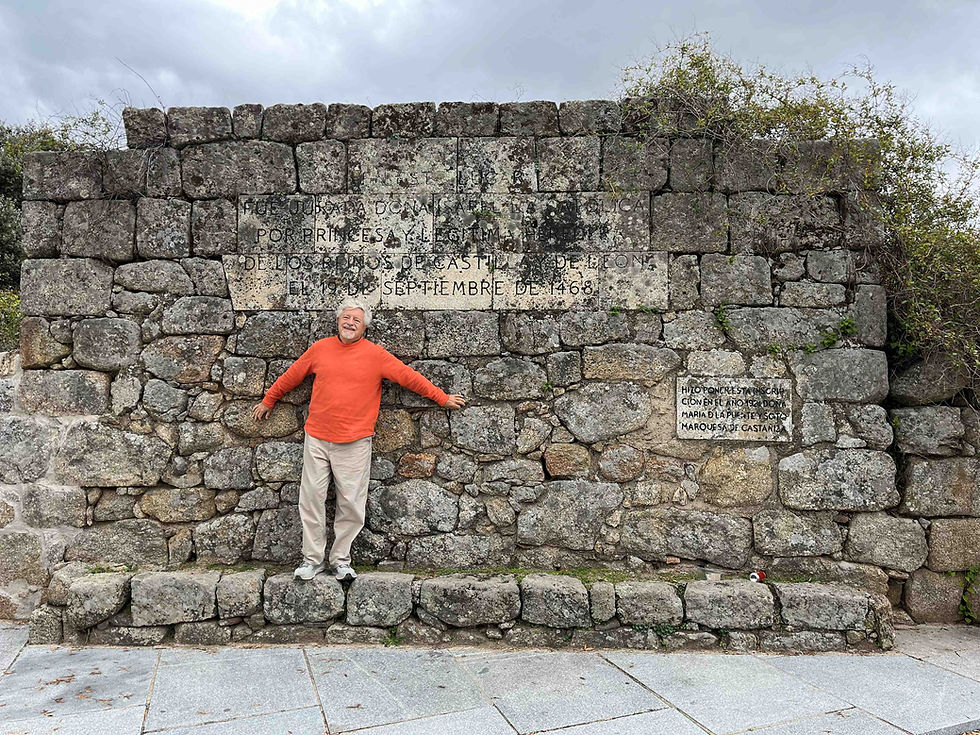
Everything here is made/constructed with granite (houses, castles, monuments, ...).


The following chart describes the position of this wine growing area in the sun exposure vs. temperature relative to some other wine regions that share some commonality with it:

Basically, these 3 prototypical Garnacha (Grenache) growing regions have very significant sun exposure during the growing and ripening seasons. However, Bernabeleva has cooler temperatures than Southern Côtes du Rhône. It's closest town with publicly available data (San Martín de Valdeiglesias) is at a lower elevation than Cariñena, the birth place of this varietal, but Bernabeleva's vineyards are an average of 120 meters higher than this town and therefore, they may be very close to the latter. In fact, the top elevation in both, Bernabeleva and Cariñena is 850 meters (2,800 ft).
The chart below shows how hot and dry the Summer (ripening season) is. During the months of July and August the average temperature is 77 F (25 C), and there is minimal precipitation. In fact, the Summer storms are unevenly distributed and a vineyard may see some rain while a contiguous vineyard see no rain whatsoever.

Under these circumstances, grapevine survival is often on edge, and in fact, some of Bernabeleva's parcels have voids from dead vines.
This very hot Summer climate makes it necessary to harvest early, sometimes as early as late August, so that the acidity of the grapes is maintained. The consequence is light colored wines, mineral and with delicate aromas.
The next field videos are all jewels (in my modest opinion) where Juan Díez Bulnes talks about the different plots (parcels) and varietals. Let' not miss any.
After so much information about the vineyards and with the cold January temperatures permeating our bones we headed down to the winery where we tried several red and white wines. Juan extracted them from the barrels. As you will notice, every barrel had the name of the parcel where the grapes came from. Bernabeleva produces wines with blends of its vineyards called Navaherreros (red Garnacha) and Cantocuerdas (white Albillo Real) but in addition, and much more interesting, it also crafts parcel-specific wines in which all the grapes come from one of the parcels we have seen in the prior videos. Each of these wines had its own characteristics as a result of parcel elevation, orientation, soil, harvest date, etc. The differences between these wines were the result of the terroir that we have discussed in the first part of this post. Quite an experience!


Most Bernabeleva's wines come from grapes very lightly pressed, raking based on gravity
instead of pumping, and measured aging in French oak. Juan's winemaking philosophy is to respect the flavors of the grapes and to maintain the expression of their terroir.
Juan's wines are just different and something special to be carefully tasted. You will be looking for softness, delicacy and hints more than a blush impact. In a blind tasting I could have taken them for Burgundy or Beaujolais Villages. If you are a Cab fan you may be missing impact but if you are a Pinot Noir or Gamay lover, you may find the tasting experience very rewarding.
And going back to the comparison with Cariñena, whose wines are typically of darker color, fuller body, and more astringency, the difference in my opinion comes from three factors: Granitic instead of slate soils, earlier harvesting, and the way Juan makes his wines favoring acidity preservation and low tannic extraction as we saw during our visit to the winery.

And to finish the visit, indeed, we had to enjoy San Martín de Valdeiglesias' gastronomy. In the prior visit we had eaten at . This time we chose Hacienda La Coracera where we had the honest and affordable menu of the day. We were grateful they waited for us for a very late lunch at 3:00 pm. We were the only customers left at the restaurant but they waited for us with a smile in their face.


I took the following wines home:
I actually enjoyed the white Albillo Real tremendously. I am keeping the Maestro Garnacha for some aging to see what happens ...
I have seen Bernabeleva's wines in a wine store near Johns Hopkins University in Baltimore. It can be purchased on line at Millesima USA, SaratogaWine.com, Flatiron Wines & Spirits, All Star Wine & Spirits, and Rare Wine Co.,
I hope you enjoyed these videos and learnt something about the terroir in this Garnacha and Albillo Real growing region, about other varietals, some of them obscure and unknown, and about how Juan Díez Bulnes tries to understand and express them in our wine glass.


