Wines from the Croatian Adriatic Coast

Dear friends,
This story started at the 2025 American Wine Society Annual Conference in Chantilly, VA. I attended to obtain my Wine Jugde certification but the conference had much more to offer. I participated in very interesting morning and afternoon sessions and I flew around like a bee in the exhibitor’s hall getting to know the wines and the people behind them. It was a marvellous experience that I would recommend anybody who loves wine and can wisely control its ingestion.
I met Mirena Bagur in the Croatian Premium Wines stand. I was immediately impressed by her knowledge, her passion and her wines. Right there, I proposed a presentation to our American Wine Society (AWS) City of Pittsburgh chapter and she and her husband Win agreed.

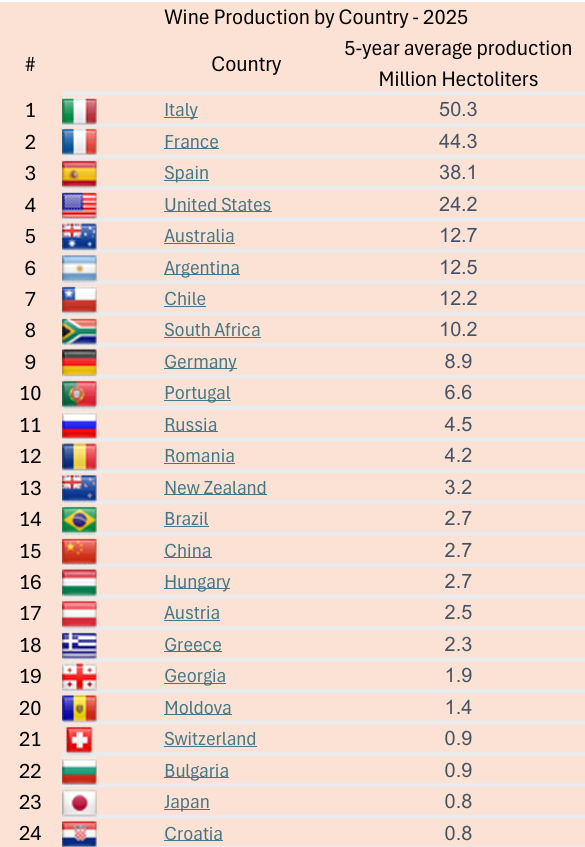
Croatia is the 24th country by wine production. That explains why its wines are not frequently found in wine store shells. However, the quality of its wines is remarkable and deserves attention.
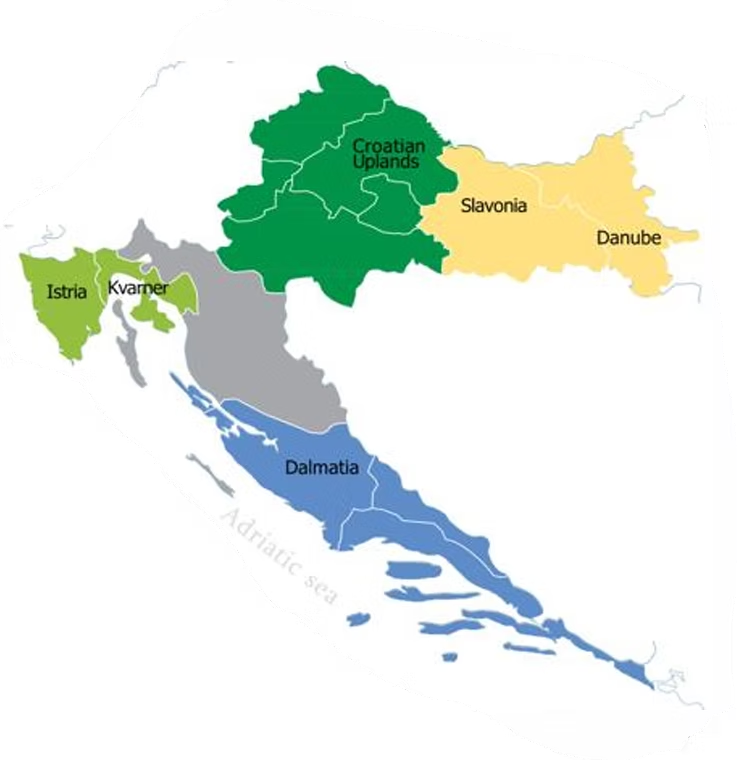
Croatia is divided in four distinct regions, each with its own climate and soils. The two inland regions have continental climate while the two in the Adriatic Coast have Mediterranean climate.
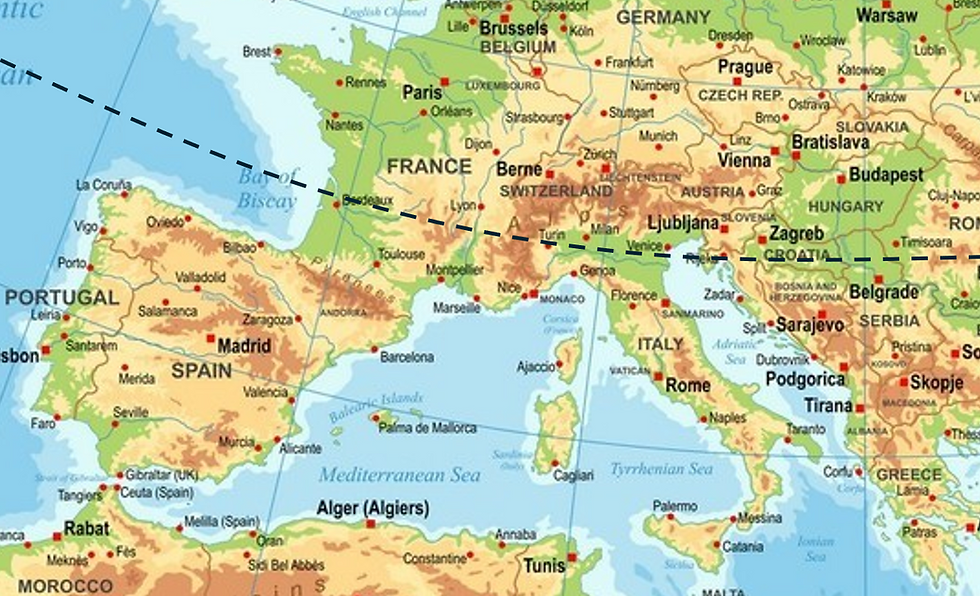
The Croatian Coast is located South of Parallel 54 at the same latitude as Northern Spain, Bordeaux, Côtes du Rhône, The Langhe and Chianti. However, its wines are very different because of its location. It has Mediterranean climate with very hot and sunny Summers.
We organized the AWS City of Pittsburgh chapter event for February 20th 2026 and the demand was so high that I organized a second event on February 21st that was attended by subscribers to this Website as well as members from the AWS Pittsburgh East and Alle Kisky chapters. We focused on wines from the Dalmatia and Istria-Kvarner regions. We also invited a few members of Osher from University of Pittsburgh.

Mirena Bagur presenting at the February 21st and 22nd events
We tasted the following wines:

Damjanic Malvazija 2022

This white from Istria was crafted with one of the 17 different Malvasia varietals called Malvazija Istriaka. Very dry and mineral, to the point of being salty, it boasted Meyer lemon, apricot and Mediterranean herbs aromas. Medium body, medium length with a slight bitterness, and very refreshing. This was Sally’s favorite wine.
The vineyards are located in the vicinity of Poreč, one of the most beautiful towns of Croatia with clear Austrian and Italian influence in its architecture and culture.

The Dalmatian Dog Pošip 2023

This white wine from Smokvica, in the island of Korčula, is very mineral and distinctive. I think if I tried it blind I would recognize it. The aromas reminded Sally and me of fresh lemon, acacia flowers and cooking herbs (maybe oregano and/or thyme). During the event, participant’s white favorite was almost evenly split between this one and the Malvazija.

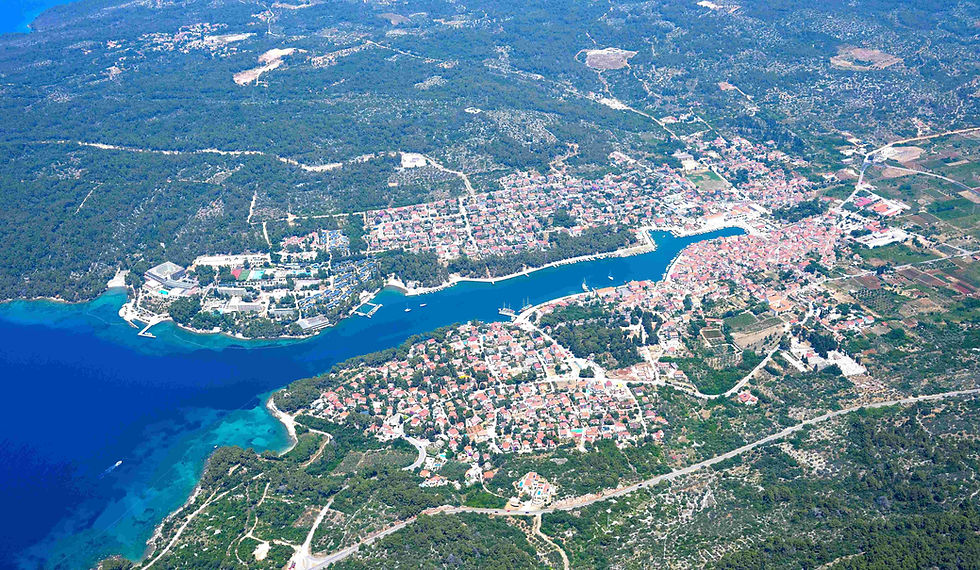
Korčula is the most forested of the Adriatic islands. Ancient Greeks gave it the name of Dark Island which derived into its actual name. The island is full of history and old architecture. It is very much worth visiting.
While young and backpacking through Europe I visited Split, the Dalmatian capital, and saw two ferries, one departing immediately for Stari Grad, in the island of Hvar, and the other one later for Korčula. Impatient as I was, I took the first one. Beautiful place where I met Damira. I visited her the following year but eventually we lost contact. I wish her the best.
We paired those white wines with a typical Croatian dish called black rice. It is a risotto using cattle fish ink. Well, under the direction of our food coordinator (María), Rick, she and I prepared our three versions. We used paellera pans and I think they looked more Spanish “arroz negro” than Croatian.
Rick’s, Ricardo’s and María’s Black Rice

Fakin Teran 2022

This was a relatively young red wine with no oak aging crafted with Teran, a native varietal of Istria. Also cultivated in Northern Italy where they call it Terrano. It produces tannic, muscular wines, and Fakin’s was not an exception. Intensely fruity with fresh blackberry, pomegranate and prickle fig, as well as crashed red roses, it filled and coated our mouths. Juanjo compared it to a Monastrell from Jumilla. Its high acidity balanced that power keeping it alive. Teran is often consumed young but we discussed at the event that this one could be aged, … and for a long time!
The prior vintage was rated 93 pts. by Wine Enthusiast. See below family photos with a T-Shirt designed after a group of enthusiastic American visitors said “What a … good wine!”
The Fakin Family in its Teran vineyards in Istria
Testament Dalmatian Dog Babic & Plavac Mali NV

This red wine was Non-Vintage (NV) because the Babic was from one vintage and the Plavac Mali from another one. Like the Teran, this wine had no oak aging but, opposite to it, it was of light complexion. Babic produces light color light body wines. In this case, the addition of Plavac Mali was intended to add color and body.
This wine appeared young, light a fruity/flowery. I was thinking of a predominant red cherry aroma when Win said cough drops. An, certainly, most participants agreed. I compared this one with a Pinot Noir but thinking more about it I thought that a Gamay from one of the Beaujolais appellations would fit it better. It seemed to me as less complex than the prior wine but extremely pleasant and I thought of a prosciutto pizza as a good pairing.
Volarevic Plavac Mali Blue 2019

And here we have what most considered the star of the evening. And there were many reasons for that. First, it was crafted with Plavac Mali, unarguably the main Adriatic Croatia varietal. Second, it had very wise oak aging – just the right time and oak usage to develop deep bouquet while keeping the fruit alive. And third, most of us like this style of wine with color, medium to full body, and plush structure.
It was not too dissimilar from a California Zinfandel and, in fact, there was a reason for it. Zinfandel is genetically identical to an ancient Croatian varietal called Tribidrag. Plavac Mali is a cross of Tribidrag with another local varietal. For many years it was assumed that Zinfandel was Primitivo from Puglia and was brought to the US by Italian migrants. However, one of the most fascinating ancestry hunts by UC Davis in association with the University of Zagrev demonstrated that while Croatia was part of the Austro-Hungarian Empire, Tribidrag was brought to the Imperial Nursery of Viena, and from there it travelled to Long Island where it resided for 21 years before making it to California. See the map below:

Plavac Mali is a difficult grape varietal because it has uneven maturing. Look at the grape bunch below:

That characteristic lends itself to winemaker decisions: When do I start the harvest? Early harvest will include some grapes that are still green and have not undergone the veraison. Late harvest will have all grapes mature but actually some beginning to become raisins. Well … it all depends on what type of wine the winemaker wants to make!
Look at the beautiful slopes with plenty of sun where Plavac Mali grows in the Dalmatian islands. Some of the vineyards have steep slopes favoring drainage, health and sun exposure.

Franković Luna Blanca Muskat Momjanski 2023

And we arrived to our last wine. A dessert wine from the interior of the Istrian peninsula based on Malvazija. This wine was not as sweet as we expected for a dessert wine. I would classify it as off-dry. And people loved its apricot, peach and acacia flower aromas. It paired very well with the raspberry and cream pies brought by Nancy from La Gourmandine and the chocolate mousse prepared by Paul.
Paul’s Chocolate Mouse and Nancy’s Raspberry and cream pastry from La Gourmandine
That was a sweet finish to a very sweet experience.
We really enjoyed the Adriatic Croatian wines and were able to discover, by the hand of Mirena Bagur, a whole new range of grape varietals and very good wines. On behalf of the AWS City of Pittsburgh chapter, my wife, Sally and myself I would like to warmly thank Mirena and Win for coming to Pittsburgh and conducting this very educational and passionate tour of Adriatic Croatian wines.


